The Boston Phoenix Years, 1988 – 1991

Frances Hamilton: Pieces of Time

May 22nd, 1988
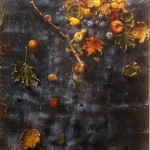
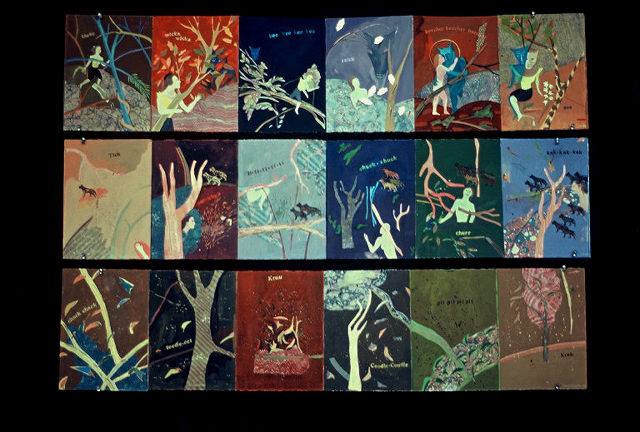
France Hamilton, Beastwood Trilogy, 1980

FRANCES HAMILTON’s art doesn’t come from the head; it comes from the hand and the heart. And that’s why a show of her work is always so rewarding. Her images stay with you, growing richer and deeper, as time goes by. They trigger memories. Major or minor, they touch a chord.

Read the full article »
The Situationists

January 28th, 1989
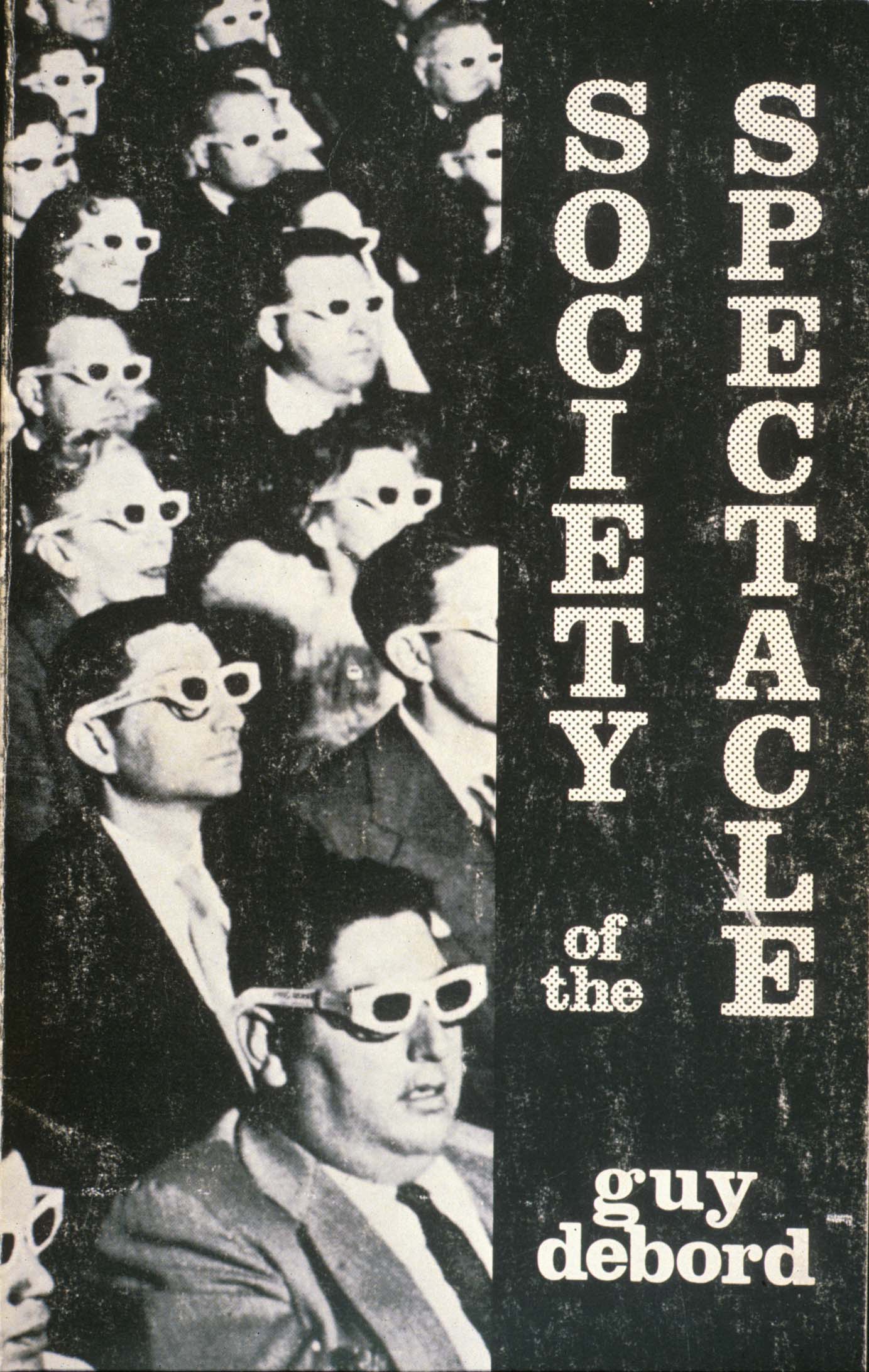
Guy Debord, Society of the Spectacle

The Situ­a­tionists called for an art of excess, delirium, outrage, and social change. They believed that capi­talism had turned contem­porary life into a society of “spec­tacle” that its inhab­i­tants could only passively watch and consume. Situ­a­tionism would bring art out of the museums and into the streets, and sabotage the society of spec­tacle by creating situ­a­tions in which people could turn their own lives into a creative experience.

Read the full article »

Courtly Splendor: Twelve Centuries of Treasures from Japan

March 21st, 1989
Calligraphy by Ono no Michikaze, Tokyo National Museum

The silvery glow of the moon and the flow of an under­ground river are reflected in sinuous callig­raphy that swoons down a page from 12th century book of poems, strewn with shim­mering silver roses: “True, I say nothing/ but the longing in my heart/ reaches out to you,/ secret as the constant flow of an under­ground river.”

Read the full article »

Roger Kizik

April 19th, 1989
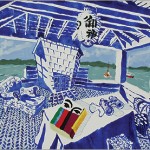
Roger Kizik, The Boathouse, East Anglia, 1998, New Bedford Art Museum

ROGER KIZIK’s loopy, staccato line describes fishing boats with names like Frolic or Finast Kind, houses on the beach, the book he is reading or the tool he is using for fixing up his house or boat. The things in his drawings press in on him; they cluster around him, rich with hidden corre­spon­dences and secret messages, composing his life.

Read the full article »

Earth Day

May 7th, 1989
Robert Ferrandini, In Between a Corrosive State and a Disappearing Soul, 1989

It’s all coming from memory,” says ROBERT FERRANDINI. “From fairy tales, from childhood — from imag­ining. The way I see it, it’s the land­scape of the mind. Lots of land­scapes came to me from the movies. Fort Apache. Red River. Cheyenne Autumn. The Searchers. The idea of the search — which is what I do as a painter. I go into it. I search.”

Read the full article »

American Photography: 1839 – 1900

June 2nd, 1989
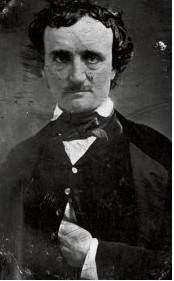
Marcus Aurelius Root, Edgar Allan Poe, 1848

The people in the portraits present anxious faces to the camera; having your picture taken was a serious business. The camera was enormous, bulky, and expensive; the process was time-consuming and myste­rious. Silvery and almost trans­parent, their delicate faces float on the shim­mering silver plates like ghosts.

Read the full article »

Adolph von Menzel

July 11th, 1989
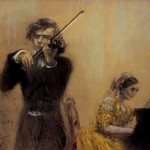
Adolph Menzel - Clara Schumann and  Joseph Joachim

MENZEL’s drawings often show people and things as if they were turning into shadow, turning into smoke, dissolving into a cloud; just about to disappear. He said, “I early culti­vated the habit of drawing things as though I were never to see them again.”

Read the full article »

Mary Cassatt

July 14th, 1989
mary cassatt letter

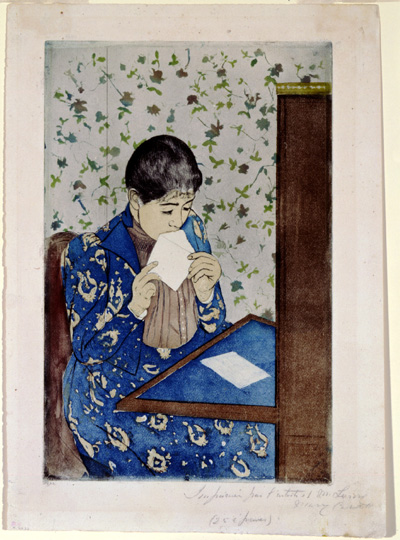
In many of the prints, a woman’s face is partially obscured, either because of the way she has turned her head, or because she is holding some­thing in front of her face ‑‑ a hand, a letter, a child. This conveys a sense of mystery, a feeling that there are secret meanings and moments of tragedy and what Virginia Woolf called “ecstasy” — hidden in the texture of a woman’s daily life.

Read the full article »

American Screenprints

September 26th, 1989
Andy Warhol, from 10 Marilyns

Many of the most memo­rable images of the sixties were silkscreen prints: Andy Warhol’s soupcans, Marilyns, and Jackies, Roy Lichtensteins’s day-glo brush­strokes on Ben-Day dots, Sister Corita’s Flower Power messages, Robert Indiana’s LOVE, and Ed Ruscha’s dazzling 1966 Standard Station, radiant and gleaming in the Cali­fornia light.

Read the full article »

My Day Without Art

December 4th, 1989
Day Without Art, photo Joe Wrinn

Standing at the center of the spiral, I see the backs of all the chairs facing away from me, and feel a tremendous shock of lone­liness and loss. Looking down from the balcony, I see that the chairs are the beginning of a spiral that could go on forever.

Read the full article »

Ruins at the Rose

December 8th, 1989
Meryl Brater, Form of Language, Rose SArt Museum 1994

The 80’s began with big, shiny, self-confident paintings, but they are ending with of shreds and tatters, and anxious premo­ni­tions of a ruined world. They reminded me of the ending of William Gibson’s science fiction novel Count Zero, when a bril­liant computer distills the few remaining frag­ments of a ruined civi­lization into exquisite little construc­tions. Or these lines from a Shake­speare sonnet; “bare, ruined choirs, where late the sweet bird sang”.

Read the full article »

Minor White

December 18th, 1989
Barn and Clouds, in the Vicinity of Naples and Dansville, New York 1955

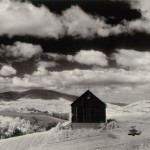
MINOR WHITE’s photographs convey a sense that behind the visible world is another world — a world filled with meaning and magic. He was fasci­nated by photography’s ability to show what he called “things for what else they are.” He liked to quote the thirteenth-century German mystic Meister Eckhart: “The eye with which I see God is the same eye with which God sees me.”

Read the full article »

Yoko Ono

January 7th, 1990
Yoko Ono

Every viewer who chooses to partic­ipate will have a different expe­rience. For me, it was a moving medi­tation on loss, change, and getting a second chance. As one of the char­acters in William Faulkner’s novel The Wild Palms says, “Between grief and nothing, I will take grief.”

Read the full article »

Robert Whitman

January 14th, 1990
Laurie Anderson, Strange Angels

The canvas curled back like a white wave. The light turned red. Silhou­ettes of dancers moved through the white space like brush­strokes moving across a picture plane. The light turned white. The ceiling rippled and billowed. Silence. White light. I was taking notes, and the only sound I could hear was the sound of my own writing. It was over.

Read the full article »

Weston’s Weston: Portraits and Nudes

January 21st, 1990
Tina Modotti, Edward Weston, 1923

WESTON’s portraits of friends and lovers are so intense that their souls seem to flicker through their sensitive faces and expressive hands. But Weston’s Nudes are seen in nameless frag­ments, as cool and smooth as marble. You see their bodies, but their faces are turned away.

Read the full article »

Sophie Calle

January 24th, 1990
Sophie Calle

SOPHIE CALLE borrows elements from detective novels, philo­sophical inves­ti­ga­tions, the film noir, the nouveau roman, docu­mentary photog­raphy, love letters, art movies, B-movies, John Cage’s theories of randomness, and Joseph Beuys’s actions. She combines them in star­tling ways, as medi­ta­tions on the myste­rious spaces between self and other.

Read the full article »

The Cone Collection

January 28th, 1990
Henri Matisse. Purple Robe and Anemones. 1937. The Baltimore Museum of Art

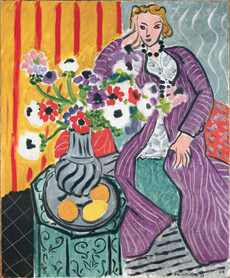
The CONE sisters collected art because they loved it and wanted to live with it. Their art collection became an emblem of their secret selves — a vision of the richness of their inner lives. Many of the images here show women the same expression on their face — a look of contentment, completeness, and self-fulfillment.

Read the full article »

The Grand Tour

January 28th, 1990

Light as a whisper, these elegant images, in the delicate style known as ROCOCO, convey the “sweetness of life” before the Revo­lution. Some­thing of the warmth of the artist’s hand still lingers in all the little jabs and touches of chalk or ink that make up these deli­cious little 18th century drawings and prints.

Read the full article »

Textile Masterpieces

February 8th, 1990
John Singer Sargent, The Daughters of Edward Boit, 1882, MFA Boston

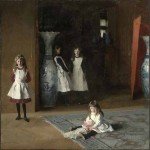
Rugs and blankets, shrouds and shawls: textiles touched the lives of the people who lived with them. Slum­bering in store­rooms, rolled up and protected from light, these textile master­pieces have kept their vibrant colors and some­thing of their human warmth. Now, unfurled, they look like magic carpets, poised to rise.

Read the full article »

The Starn Twins

February 18th, 1990
Mike and Doug Starn

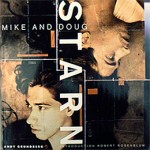
It can be fright­ening, but that’s life,” said Doug. “Art is part of life,” said Mike. “It’s a real part — it’s the essence of life,” said Doug. “There’s no reason to make it perfect,” says Doug. “We want to show the physical nature,” said Mike. “The physical nature,” said Doug. “Of every­thing, but in particular, Art,” said Mike.

Read the full article »

David Salle/Imitation of Life

March 29th, 1990
Imitation of Life

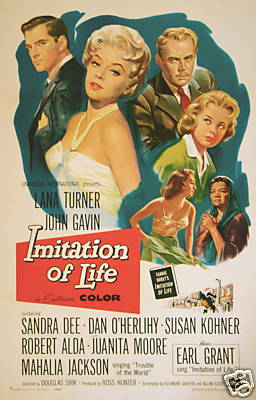
One of DAVID SALLE’s favorite movies is Douglas Sirk’s IMITATION OF LIFE. In one scene, all the char­acters are jammed into a taxi, watching a funeral through the windows. In Salle’s paintings, too, many different things are happening at once, every­thing is crammed together, nothing seems finished, every­thing is seen in reflection or juxta­po­sition or through a filter or a pane of glass, and all of the contra­dic­tions are left unresolved.

Read the full article »

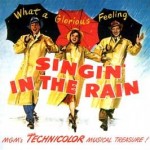
Gene Kelly

April 24th, 1990
Singin' in the Rain, 1952, MGM

GENE KELLY was a great dancer because his dancing seemed to be an overflow of his superb vitality — a natural extension of his person­ality. In all his movies, the tran­si­tions to dance are incredibly smooth, because even when he’s not dancing he’s thinking about dancing – his athletic body is flexed and limber– and he’s ready to roll, even on an empty set with 500,000 kilo­watts of electric light mimicking stardust and a giant fan creating the sensation of a moon­light breeze.

Read the full article »

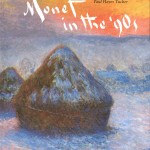
Monet in the ’90’s: The Series Paintings

April 30th, 1990
Monet in the 90's

In painting after painting, the earth moves and the water swoons and the sky tumbles and all the blues and pinks and purples and reds and oranges dissolve into one. Earth and water come together, again and again, and explode in a symphony of light and color and air.

Read the full article »

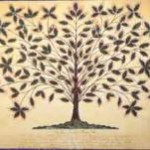
Shaker Spirit Drawings

May 1st, 1990
Hannah Cohoon, Tree of Light

In the nine­teenth century, women in Shaker commu­nities recorded their visions of heavenly gardens in “spirit” or “gift” drawings — simple gifts that speak to the heart. The words, written in tiny, spidery hand­writing, are faded and almost illegible, but the little birds and hearts and flowers make the feelings clear.

Read the full article »

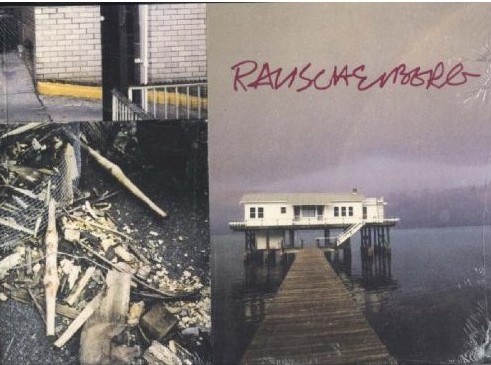
Robert Rauschenberg

May 22nd, 1990
Rauschenberg- Scenarios

Great art cheats death of its victory by trans­forming memory’s fragile frag­ments into some­thing lasting, precious, and incor­ruptible. The ghostly white porch is a window to a world beyond flesh and paint — a world without sorrow or substance, color or weight. It is cool, pale, and white as a bone.

Read the full article »

Jean Arthur

May 30th, 1990
Jean Arthur

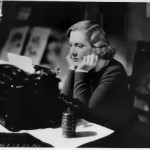
On film, JEAN ARTHUR is impulsive, but truthful ‑‑ true to the moment, while the moment lasts. She is chaste, but not prudish; she truly inhabits her small, athletic body, and she moves like a dancer with an easy natural volup­tuousness. Her soft, gravelly voice is aston­ishly expressive. And some of her greatest lines aren’t words at all, but an aston­ishing reper­toire of whimpers, sighs, sobs, giggles, and moans.

Read the full article »

Madame de Pompadour

June 1st, 1990
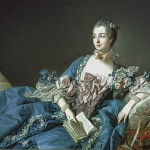
Francois Boucher, Madame de Pompadour, National Gallery of Art,Scotland

Madame de Pompadour always managed to look graceful, even in the most constricting clothes — corsets, bustles, and stays. Like Madonna, she created a Look that was supremely arti­ficial — the powdered hair, the heavily applied make-up, the elab­orate gowns. Like Madonna in her John-Paul Gaultier bustiers, La Pompadour in her negligée proudly displayed her sexu­ality as the source of her power.

Read the full article »

Censorship and the Arts

June 9th, 1990
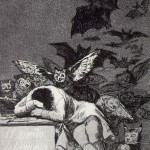
Goya, The Sleep of Reason Produces Monsters

It takes a lot of courage to be an artist. All kinds of things get in the way, but the thing that gets in the way the most is fear. That’s why the threat of censorship is so dangerous to Art. Art helps us to see the beau­tiful — and also to face the ugliness in life. Artists need to be free to show us the world as they see it — to tell it like it is.

Read the full article »

Judy Kensley McKie and Todd McKie

June 15th, 1990
Judy McKie, American Craft Magazine

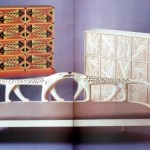
In 1969, TODD and JUDY MCKIE painted banners with the signs of the Zodiac for Wood­stock, which people pulled down to use as tents and blankets in the rain. Judy began making furniture in the early 70s to furnish their apartment. One day she impul­sively carved two crouching figures into the arms of a butcherblock couch.

Read the full article »

Louis Cartier

June 22nd, 1990
Ginger Rogers

LOUIS CARTIER used precious metals and jewels in a highly polished, sparkling, and yet almost casual way way — the way Fred Astaire and Ginger Rogers danced. The shimmer of dozens of tiny diamonds on a cool platinum surface is the essence of sophis­ti­cation –- like a Cole Porter song.

Read the full article »

Matt Mullican

July 6th, 1990
Matt Mullican, A Drawing Translates the Way of Thinking

Being inside MATT MULLICAN’s instal­lation is like being inside Matt Mullican’s mind — a dizzying expe­rience. He’s constantly clas­si­fying and re-ordering every­thing. “It’s the first time I’ve arranged my meaning as objects in space depicting my meaning,” he says.

Read the full article »

Martin Puryear

July 9th, 1990
Martin Puryear, Catalogue, MOMA

His falcons are elegant objects, yet they are also birds of prey. They are chained to a perch, dreaming of flight; perfectly at rest, yet poised to spread their wings and reach for the sky. His art conveys a sense of scraping away and discarding every­thing that is not essential — of trav­elling light, like a nomad, and soaring high, like a bird.

Read the full article »
Pierre Bonnard: Prints

September 1st, 1990
Bonnard, Verlaine, Parallelement

BONNARD’s art is an art of nuance and suggestion. His friend, the Symbolist poet Paul Verlaine, wrote:
“You must have music first of all,
and for that a rhythm uneven is best,
vague in the air and soluble
with nothing heavy and nothing at rest.”

Read the full article »

Barbizon

October 1st, 1990
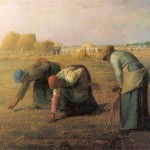
Millet, The Gleaners, Musee d'Orsay

Barbizon was a place and a style — and also a feeling — a mood — a time of day — dusk, when the forms of things soften and the edges blur, and a kind of hush falls over the world. The earth is solemn, soft, and tender, like a bed — and some­times like a grave.

Read the full article »
Chuck Holtzman

November 7th, 1990
Chuck Holtzman, Untitled 2010

His sculpture is like a very sophis­ti­cated game of musical chairs, where all the pieces come together for a moment of perfect, precarious balance. In his drawings, the charcoal keeps on dancing, long after the music stops.

Read the full article »

Linda Connor

November 7th, 1990
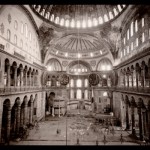
Linda Connor, Hagia Sophia, Istanbul, 2005

In LINDA CONNOR’s camera’s mystical eye, the world is filled with ancient sacred things. The same images repeat and recur in her body of work — spirals, veils, beams of light shining into a dark place, open doors, closed eyes, hands — but each time you see them, they mean some­thing different. Each time you see them, they mean some­thing more.

Read the full article »
A Tribute to Kojiro Tomita

November 8th, 1990
Chu Ta, 1626-1705

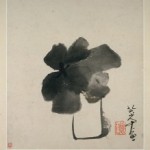
It is said that CHU TA never spoke — but he laughed, cried, waved his hands, and drank rice wine most expres­sively while he painted. Every single touch of Chu Ta’s brush means some­thing. Every mark still matters. Hundreds of years later, you can still almost feel the movement of his hand — the bold drunken touch of his brush.

Read the full article »
The Unique Print

December 9th, 1990
Mary Frank, Fern,1986, MFA Boston

In monotype, there is no fixed image on the printing surface. The artist paints or draws on a printing plate, makes changes, and prints again; the final proof is an accu­mu­lation of all the changes that have been made. Pale, faded images of past impres­sions often cling to mono­types like shadows; they are called “ghosts.”

Read the full article »
Love and Death

December 14th, 1990
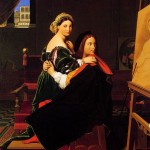
Ingres, Raphael and the Fornarina, 1812, Fogg Art Museum

The prayers were long, thin strips of paper or canvas, newsprint, photographs, or tinsel, embell­ished with drawings, paint, cut‑outs, dried roses, gold leaf, buttons, beads. Some were abstract; some had words; others had musical nota­tions written on them. One prayer was made from a piece of old, paint‑splattered blue jeans, with a peace symbol and love beads.

Read the full article »
Robert Wilson’s Vision

January 17th, 1991
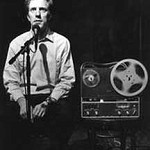
Robert Wilson

ROBERT WILSON’S VISION is struc­tured like a journey — a journey that moves from morning to night — from white to black — from the past to the future — from birth to death. A journey that has no beginning and no end, but all takes place in a timeless, endless present.

Read the full article »
The Sound Artist: Hans Peter Kuhn

February 18th, 1991
Hans Peter Kuhn at the Mattress Factory

Sound art is more open and much closer to life than music. Music is a filtered expe­rience. I’m not a composer. I don’t want the emotional view bound or directed in any one direction. I want to keep it open. I’m always trying things out. I hear some­thing and I can pick it up and react in minutes. I’m inter­ested in every­thing that makes a noise.”

Read the full article »
When We Dead Awaken

February 21st, 1991
When We Dead Awaken at the ART

A neon blue river of light crosses the stage on a diagonal. A black mountain looms beyond, pierced by a stark white waterfall. The sculptor sits brooding on a rocky throne; an egg-shaped stone is pierced with a spear. Two Irenes enter, and lie on the ground, like stones. “You have killed my soul,” they cry. “I am an artist!” cries the sculptor. One Irene sits on the rock, like a statue. “I was a human being too.”

Read the full article »
Photography at the Boston Athenaeum

March 28th, 1991
The Boston Athenaeum

The Boston Athenaeum, a Library with gracious high-ceilinged rooms adorned with columns and all kinds of Graeco-Roman archi­tec­tural details, and filled with books and pictures, was built by 19th century Bosto­nians as a modern temple to Athena, Goddess of Wisdom.

Read the full article »
12th Annual Boston Drawing Show

April 13th, 1991
Gerry Bergstein, Entropy #3, 1992

GERRY BERGSTEIN’s drawings show scribbles, scrawls, crossings-out, angry re-workings, markings of struggle and doubt. From this chaos of marks on paper emerge luminous little still lives, marked by the process of decay: visions of a world in flux, where every­thing is changing, growing, living, dying, and being reborn.

Read the full article »
Rosemarie Trockel

May 25th, 1991
Rosemarie Trockel

All these images are oblit­erated, defaced, lost. It’s about those marginal, mundane expe­ri­ences that are for some reason signif­icant to her. There are certain things about her work that are myste­rious. They remain myste­rious. And she trea­sures that mysteriousness.”

Read the full article »
Fragments of Antiquity

June 21st, 1991
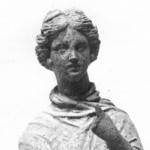
Standing Draped Woman from Myrina in the later 3rd century B.C

All that we know of Greece has come to us in ruins – armless, headless, faded, fallen, broken, battered, lost in trans­lation. What we have are frag­ments, frag­ments that have lost almost every­thing – except their poetry. But, gener­ation after gener­ation, that poetry has never lost its thrilling, visionary gleam.

Read the full article »
Dream Lovers

July 12th, 1991
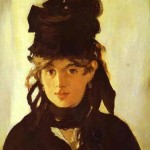
Berthe Morisot by Edouard Manet, 1872, private collection, Paris

When Berthe Morisot met Édouard Manet at the Louvre in 1867, he was 36 years old and married; she was ten years younger and still living with her parents at home. She was lively, intel­ligent, charming, talented. He was bril­liant, difficult, fickle, famous, fasci­nating. She had long admired him from a distance; he imme­di­ately wanted to paint her portrait.

Read the full article »
Elizabeth Vigee-Lebrun

July 19th, 1991
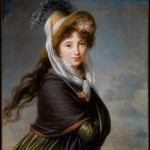
Elizabeth Vigee-Lebrun

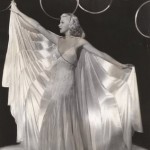
Madame Vigee-Lebrun revo­lu­tionized the portrait. She despised the powder and stiff clothes that women wore; she let their hair down, and draped them in soft, flowing shawls and painted them looking soft, dreamy, natural, alive. Her paintings helped to create a new look, a new style, a new attitude to life in pre-revolutionary Paris.

Read the full article »
John Singer Sargent’s EL JALEO

August 28th, 1991
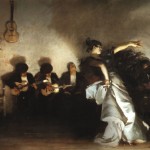
J.S. Saargent, El Jaleo, 1882, ISGM

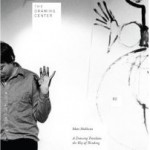
In a dark, smoky room, a solitary dancer raises up her arm in a tense, ecstatic movement of inspi­ration; her other hand clutches the skirt of her dress — a flash of white light gleaming in the dark. You can almost hear the rhythmic weeping of the guitars; you can almost feel beating of the dancer’s tumul­tuous heart.

Read the full article »
Pleasures of Paris

September 6th, 1991
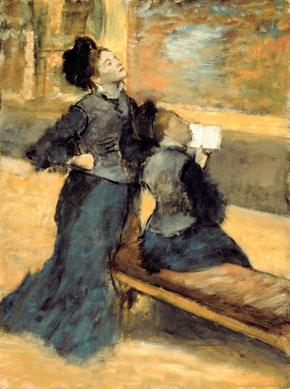
Edgar Degas, Mary Cassatt at the Louvre, 1879, MFA Boston

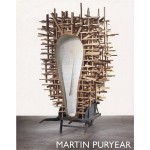
in a moment, the door will swing back shut, and the cafe will disappear, and then the street singer will vanish, into the street, into the night, never to be seen again. Only here, in this painting, where she is forever caught in the golden net of the Paris night at the moment when she stepped out through the swinging door, onto the street, and into our dreams.

Read the full article »
Busch-Reisinger Museum

September 14th, 1991
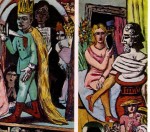
Max Beckmann, The Actors, 1942, HUAM

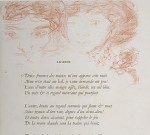
A crowded stage, and all the players on it. A king, wearing a crown, stabs himself in the heart. A woman looks at her reflection in a mirror, next to a statue of a Greek god. Modern men and women read the news­paper, talk, flirt, and fight with real knives. MAX BECKMANN’s The Actors aims to encompass all of Art and Life in thick, sure slashes of paint.

Read the full article »
Lazlo Moholy-Nagy’s Light-Space Modulator

October 4th, 1991
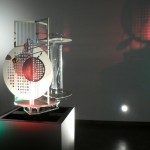
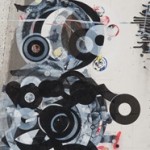
Lazlo Moholy Nagy, LIght Space Modulator, 1922

When the “light prop” was set in motion for the first time in a small mechanics shop in 1930, I felt like the sorcerer’s apprentice. The mobile was so star­tling in its coor­di­nated motions and space artic­u­la­tions of light and shadow sequences that I almost believed in magic.”

Read the full article »
El Corazon Sangrante/The Bleeding Heart

November 1st, 1991
Frida Kahlo with Hummingbird Necklace

FRIDA KAHLO’s Self-Portrait with Thorn Necklace and Hummingbird shows her in a jungle with butter­flies in her hair and a hummingbird dangling from a thorn necklace that pierces her neck, drawing small red drops of blood. “I never painted dreams,” she said. “I painted my own reality.”

Read the full article »
Paper Prayers/In the Spirit

December 19th, 1991
Jesseca Ferguson, Paper Prayer

Many of the artists here are of a gener­ation who rejected the conven­tional comforts of orga­nized religion — and now they find them­selves facing the inevitable mystery of death alone. They are re-inventing rituals that feel authentic to them and finding new ways to satisfy their spir­itual needs. Paper Prayers has become one such contem­porary healing ritual — a small congre­gation of artists gathered together In the Spirit.

Read the full article »