Archive for the ‘Museums’ Category

Meryl at the Rose

Tuesday, April 28th, 2009
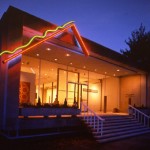
Rose Art Museum

Hundreds of people came to MERYL BRATER’s Memorial Exhi­bition at the Rose Art Museum. We all believed that Meryl would live on at the Rose, and that many gener­a­tions to come would have the chance to know her through her art. To close the museum now would be a terrible blow to everyone who loved her – to everyone who trusted their treasure to the Rose.

Read the full article »
John Singer Sargent

Tuesday, June 29th, 1999
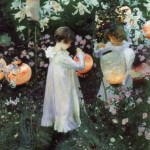
Sargent, Carnation, Lily, Lily, Rose, 1895, Tate Gallery

He was the preem­inent portrait painter of his day, and he gave it all up to paint land­scapes. His private life is a mystery. His brushwork is still dazzling. JOHN SINGER SARGENT seems to have walked out of the pages of a novel by Henry James, who wrote of him: “Yes, I have always thought of Sargent as a great painter. He would be greater still if he had done one or two little things he hasn’t — but he will do.”

Read the full article »

Object as Insight: Japanese Buddhist Art and Ritual

Saturday, June 1st, 1996
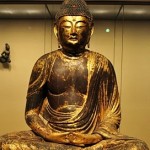
Amida Buddha, 11th century, San Francisco Asian Art Museum

Bodhisattvas with serene, all-embracing smiles; golden flower baskets for carrying lotus petals to purify a sacred space; ritual bronze chimes adorned with peacocks. “Each article is incredibly beau­tiful, but it’s only when all the articles come together, evoking the presence of the Buddha, that you can under­stand Buddhist art.”

Read the full article »

The Fire of Hephaistos

Wednesday, May 1st, 1996
bronzes

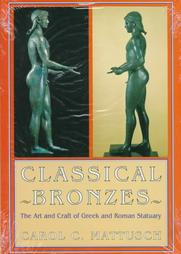
These ancient bronzes, which have long since lost their golden gleam, are still numinous frag­ments of a vanished world. One statue of young man was recently pulled out of a river; his pale sea-green body is scratched and scarred; but he is still a lovely apparition, reminding me of some lines from Shakespeare’s “The Tempest”:
“Nothing of him that doth fade
But doth suffer a sea change
Into some­thing rich and strange.”

Read the full article »

Winslow Homer

Saturday, March 2nd, 1996
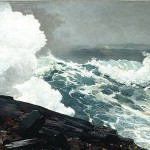
Winslow Homer, Northeaster

WINSLOW HOMER spent most of his life fishing and painting, reeling in the deep, unfath­omable mystery of the sea. His pictures often show somebody gazing out to sea, concen­trating on some­thing no one else can see. Maybe it’s the light on the water, or the wind in the sails, or a boat coming home to shore, or just the flicker of a dream.

Read the full article »

Lazlo Moholy-Nagy’s Light-Space Modulator

Friday, October 4th, 1991
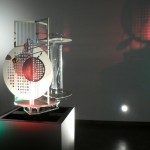
Lazlo Moholy Nagy, LIght Space Modulator, 1922

When the “light prop” was set in motion for the first time in a small mechanics shop in 1930, I felt like the sorcerer’s apprentice. The mobile was so star­tling in its coor­di­nated motions and space artic­u­la­tions of light and shadow sequences that I almost believed in magic.”

Read the full article »

Busch-Reisinger Museum

Saturday, September 14th, 1991
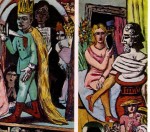
Max Beckmann, The Actors, 1942, HUAM

A crowded stage, and all the players on it. A king, wearing a crown, stabs himself in the heart. A woman looks at her reflection in a mirror, next to a statue of a Greek god. Modern men and women read the news­paper, talk, flirt, and fight with real knives. MAX BECKMANN’s The Actors aims to encompass all of Art and Life in thick, sure slashes of paint.

Read the full article »

Pleasures of Paris

Friday, September 6th, 1991
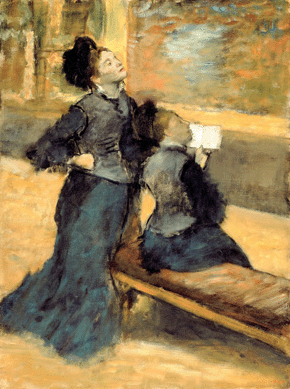
Edgar Degas, Mary Cassatt at the Louvre, 1879, MFA Boston

in a moment, the door will swing back shut, and the cafe will disappear, and then the street singer will vanish, into the street, into the night, never to be seen again. Only here, in this painting, where she is forever caught in the golden net of the Paris night at the moment when she stepped out through the swinging door, onto the street, and into our dreams.

Read the full article »

John Singer Sargent’s EL JALEO

Wednesday, August 28th, 1991
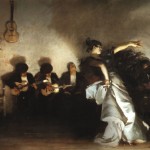
J.S. Saargent, El Jaleo, 1882, ISGM

In a dark, smoky room, a solitary dancer raises up her arm in a tense, ecstatic movement of inspi­ration; her other hand clutches the skirt of her dress — a flash of white light gleaming in the dark. You can almost hear the rhythmic weeping of the guitars; you can almost feel beating of the dancer’s tumul­tuous heart.

Read the full article »

Elizabeth Vigee-Lebrun

Friday, July 19th, 1991
Elizabeth Vigee-Lebrun

Madame Vigee-Lebrun revo­lu­tionized the portrait. She despised the powder and stiff clothes that women wore; she let their hair down, and draped them in soft, flowing shawls and painted them looking soft, dreamy, natural, alive. Her paintings helped to create a new look, a new style, a new attitude to life in pre-revolutionary Paris.

Read the full article »

Dream Lovers

Friday, July 12th, 1991
Berthe Morisot by Edouard Manet, 1872, private collection, Paris

When Berthe Morisot met Édouard Manet at the Louvre in 1867, he was 36 years old and married; she was ten years younger and still living with her parents at home. She was lively, intel­ligent, charming, talented. He was bril­liant, difficult, fickle, famous, fasci­nating. She had long admired him from a distance; he imme­di­ately wanted to paint her portrait.

Read the full article »

Fragments of Antiquity

Friday, June 21st, 1991
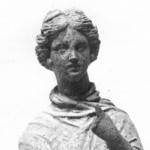
Standing Draped Woman from Myrina in the later 3rd century B.C

All that we know of Greece has come to us in ruins – armless, headless, faded, fallen, broken, battered, lost in trans­lation. What we have are frag­ments, frag­ments that have lost almost every­thing – except their poetry. But, gener­ation after gener­ation, that poetry has never lost its thrilling, visionary gleam.

Read the full article »

Guercino

Thursday, March 14th, 1991
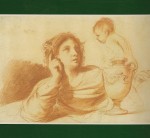
Guercino, Master Draftsman

GUERCINO drew like an angel — his gorgeous line curls across the page; his brush forms shadows that suggest a sense of the roundness and fullness of life. His best drawings are more than drawings — they are blessings, exquisite expres­sions of those moments when Art and Faith are one.

Read the full article »

The Unique Print

Sunday, December 9th, 1990
Mary Frank, Fern,1986, MFA Boston

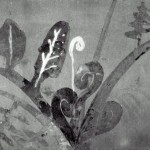
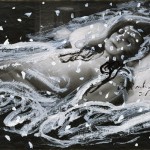
In monotype, there is no fixed image on the printing surface. The artist paints or draws on a printing plate, makes changes, and prints again; the final proof is an accu­mu­lation of all the changes that have been made. Pale, faded images of past impres­sions often cling to mono­types like shadows; they are called “ghosts.”

Read the full article »

A Tribute to Kojiro Tomita

Thursday, November 8th, 1990
Chu Ta, 1626-1705

It is said that CHU TA never spoke — but he laughed, cried, waved his hands, and drank rice wine most expres­sively while he painted. Every single touch of Chu Ta’s brush means some­thing. Every mark still matters. Hundreds of years later, you can still almost feel the movement of his hand — the bold drunken touch of his brush.

Read the full article »

Barbizon

Monday, October 1st, 1990
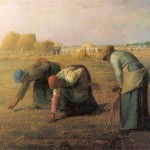
Millet, The Gleaners, Musee d'Orsay

Barbizon was a place and a style — and also a feeling — a mood — a time of day — dusk, when the forms of things soften and the edges blur, and a kind of hush falls over the world. The earth is solemn, soft, and tender, like a bed — and some­times like a grave.

Read the full article »

Pierre Bonnard: Prints

Saturday, September 1st, 1990
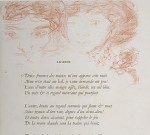
Bonnard, Verlaine, Parallelement

BONNARD’s art is an art of nuance and suggestion. His friend, the Symbolist poet Paul Verlaine, wrote:
“You must have music first of all,
and for that a rhythm uneven is best,
vague in the air and soluble
with nothing heavy and nothing at rest.”

Read the full article »

Martin Puryear

Monday, July 9th, 1990
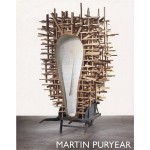
Martin Puryear, Catalogue, MOMA

His falcons are elegant objects, yet they are also birds of prey. They are chained to a perch, dreaming of flight; perfectly at rest, yet poised to spread their wings and reach for the sky. His art conveys a sense of scraping away and discarding every­thing that is not essential — of trav­elling light, like a nomad, and soaring high, like a bird.

Read the full article »

Madame de Pompadour

Friday, June 1st, 1990
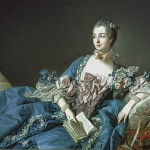
Francois Boucher, Madame de Pompadour, National Gallery of Art,Scotland

Madame de Pompadour always managed to look graceful, even in the most constricting clothes — corsets, bustles, and stays. Like Madonna, she created a Look that was supremely arti­ficial — the powdered hair, the heavily applied make-up, the elab­orate gowns. Like Madonna in her John-Paul Gaultier bustiers, La Pompadour in her negligée proudly displayed her sexu­ality as the source of her power.

Read the full article »

Robert Rauschenberg

Tuesday, May 22nd, 1990
Rauschenberg- Scenarios

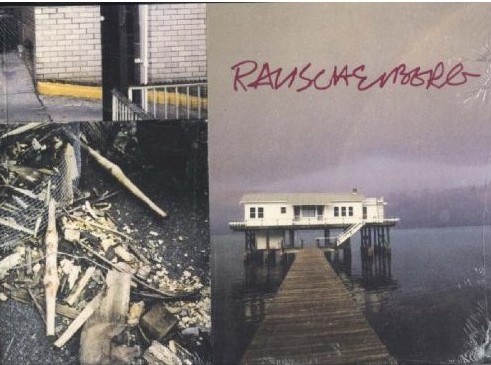
Great art cheats death of its victory by trans­forming memory’s fragile frag­ments into some­thing lasting, precious, and incor­ruptible. The ghostly white porch is a window to a world beyond flesh and paint — a world without sorrow or substance, color or weight. It is cool, pale, and white as a bone.

Read the full article »

Shaker Spirit Drawings

Tuesday, May 1st, 1990
Hannah Cohoon, Tree of Light

In the nine­teenth century, women in Shaker commu­nities recorded their visions of heavenly gardens in “spirit” or “gift” drawings — simple gifts that speak to the heart. The words, written in tiny, spidery hand­writing, are faded and almost illegible, but the little birds and hearts and flowers make the feelings clear.

Read the full article »

Monet in the ’90’s: The Series Paintings

Monday, April 30th, 1990
Monet in the 90's

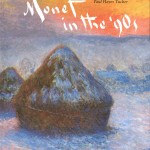
In painting after painting, the earth moves and the water swoons and the sky tumbles and all the blues and pinks and purples and reds and oranges dissolve into one. Earth and water come together, again and again, and explode in a symphony of light and color and air.

Read the full article »

Farewell Concert

Thursday, March 29th, 1990
The Concert by Jan Vermeer

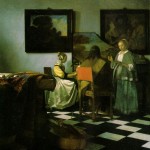
I loved THE CONCERT, the beau­tiful little painting by VERMEER. Each time I looked at it, I saw some­thing new. Now it’s gone. I try to remember every line, every shadow, every gleam of light, every sweet cadence of its silent music, but I can already feel it fading. As time goes by, it will darken and grow dim.

Read the full article »

Textile Masterpieces

Thursday, February 8th, 1990
John Singer Sargent, The Daughters of Edward Boit, 1882, MFA Boston

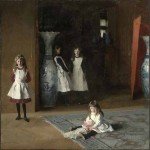
Rugs and blankets, shrouds and shawls: textiles touched the lives of the people who lived with them. Slum­bering in store­rooms, rolled up and protected from light, these textile master­pieces have kept their vibrant colors and some­thing of their human warmth. Now, unfurled, they look like magic carpets, poised to rise.

Read the full article »
The Grand Tour

Sunday, January 28th, 1990

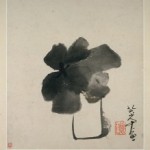
Light as a whisper, these elegant images, in the delicate style known as ROCOCO, convey the “sweetness of life” before the Revo­lution. Some­thing of the warmth of the artist’s hand still lingers in all the little jabs and touches of chalk or ink that make up these deli­cious little 18th century drawings and prints.

Read the full article »

The Cone Collection

Sunday, January 28th, 1990
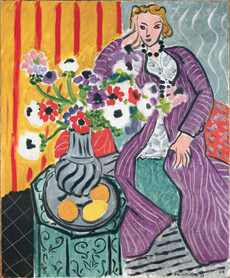
Henri Matisse. Purple Robe and Anemones. 1937. The Baltimore Museum of Art

The CONE sisters collected art because they loved it and wanted to live with it. Their art collection became an emblem of their secret selves — a vision of the richness of their inner lives. Many of the images here show women the same expression on their face — a look of contentment, completeness, and self-fulfillment.

Read the full article »

Weston’s Weston: Portraits and Nudes

Sunday, January 21st, 1990
Tina Modotti, Edward Weston, 1923

WESTON’s portraits of friends and lovers are so intense that their souls seem to flicker through their sensitive faces and expressive hands. But Weston’s Nudes are seen in nameless frag­ments, as cool and smooth as marble. You see their bodies, but their faces are turned away.

Read the full article »

Ruins at the Rose

Friday, December 8th, 1989
Meryl Brater, Form of Language, Rose SArt Museum 1994

The 80’s began with big, shiny, self-confident paintings, but they are ending with of shreds and tatters, and anxious premo­ni­tions of a ruined world. They reminded me of the ending of William Gibson’s science fiction novel Count Zero, when a bril­liant computer distills the few remaining frag­ments of a ruined civi­lization into exquisite little construc­tions. Or these lines from a Shake­speare sonnet; “bare, ruined choirs, where late the sweet bird sang”.

Read the full article »

American Screenprints

Tuesday, September 26th, 1989
Andy Warhol, from 10 Marilyns

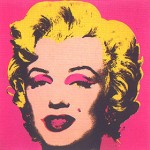
Many of the most memo­rable images of the sixties were silkscreen prints: Andy Warhol’s soupcans, Marilyns, and Jackies, Roy Lichtensteins’s day-glo brush­strokes on Ben-Day dots, Sister Corita’s Flower Power messages, Robert Indiana’s LOVE, and Ed Ruscha’s dazzling 1966 Standard Station, radiant and gleaming in the Cali­fornia light.

Read the full article »

Imperial Taste

Monday, July 24th, 1989
Imperial Taste

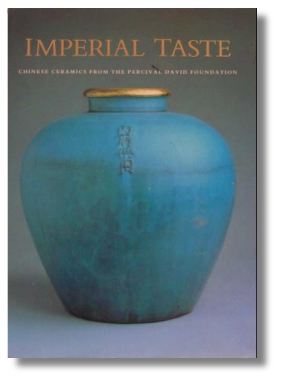
In the 12th century, the Emperor Quianlong, who was a also a poet, said, “I want color”. He got color: exquisite pale blues and greens that seem to float on the surface of the bowls’ smooth surfaces like clouds; purple splashes called “the sky at dusk”; and a pale cobalt blue that seems distilled from a serene and cloudless summer sky.

Read the full article »

Mary Cassatt

Friday, July 14th, 1989
mary cassatt letter

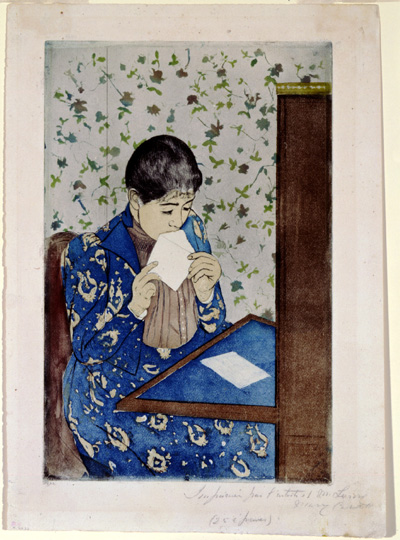
In many of the prints, a woman’s face is partially obscured, either because of the way she has turned her head, or because she is holding some­thing in front of her face ‑‑ a hand, a letter, a child. This conveys a sense of mystery, a feeling that there are secret meanings and moments of tragedy and what Virginia Woolf called “ecstasy” — hidden in the texture of a woman’s daily life.

Read the full article »
Adolph von Menzel

Tuesday, July 11th, 1989
Adolph Menzel - Clara Schumann and  Joseph Joachim

MENZEL’s drawings often show people and things as if they were turning into shadow, turning into smoke, dissolving into a cloud; just about to disappear. He said, “I early culti­vated the habit of drawing things as though I were never to see them again.”

Read the full article »

Courtly Splendor: Twelve Centuries of Treasures from Japan

Tuesday, March 21st, 1989
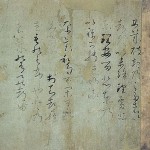
Calligraphy by Ono no Michikaze, Tokyo National Museum

The silvery glow of the moon and the flow of an under­ground river are reflected in sinuous callig­raphy that swoons down a page from 12th century book of poems, strewn with shim­mering silver roses: “True, I say nothing/ but the longing in my heart/ reaches out to you,/ secret as the constant flow of an under­ground river.”

Read the full article »

Anselm Kiefer

Wednesday, February 1st, 1989
Anselm Kiefer, Brunnhilde Sleeps, 1983, Metropolitan Museum of Art

Anselm Kiefer uses the language of modern art to rewrite the kind of grandiose nineteenth-century history painting that modern art rejected. He paints a raging elegy for the failure of reason and civi­lization to overcome the evil that is part of human nature. Yet for Kiefer, only the magic of art can build some­thing beau­tiful out of the wreck of reason and the failure of history.

Read the full article »
Images of the Mind

Monday, May 19th, 1986
Daoji, Autumn landscape, 1671, Musee Guimet

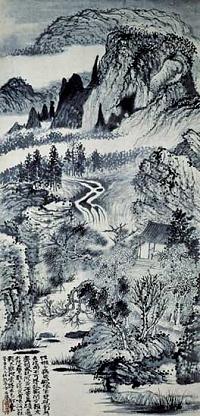
Tao Chi was a prince who became a wandering Buddhist monk. His “Melan­choly Thoughts on the Hsiao and Hsiang Rivers,” captures the mood of the end of autumn. A lonely fishing hut is half-hidden by a few sparse trees; a flock of wild geese flies over a river. The callig­raphy echoes the flight of the birds and the quiver of the leaves. Without under­standing a word, we can feel the poetry.

Read the full article »
Jean-Francois Millet: Seeds of Impressionism

Friday, June 1st, 1984
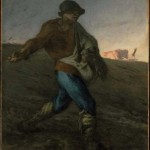
Millet, The Sower, 1850, MFA Boston

Jean-Francois MILLET saw a timeless beauty and sadness in life, in evenings dark and filled with color. “What I know of happiness is the quiet, the silence, that you can savor so deli­ciously, either in the forests, or in the fields,” he wrote.

Read the full article »
The Drawings of Palladio

Saturday, May 1st, 1982
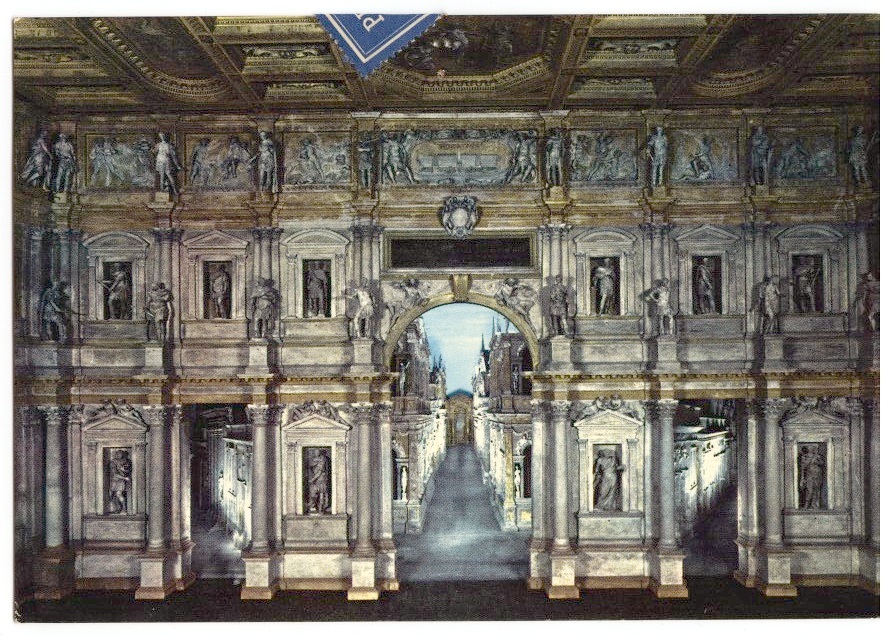
Olympic The - The Stage, Vicenza

There is some­thing divine about his talent, some­thing compa­rable to the power of a great poet who, out of the worlds of truth and falsehood, creates a third whose borrowed exis­tence enchants us.”

Read the full article »
Kush: Lost Kingdom of the Nile

Tuesday, December 1st, 1981
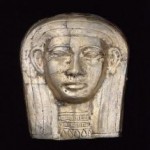
Mask of Queen Malakaye, 6th century BC, MFA Boston

Red Sea shells and polished stones from the pyramid tomb of Queen Khensa — “great of charm, great of praise, possessor of grace, sweet of love” — and other trea­sures from KUSH, Lost Kingdom of the Nile. A medi­tation on Art, Time, and the ancient river.

Read the full article »

The Dial: Arts and Letters in the 1920s

Wednesday, April 1st, 1981
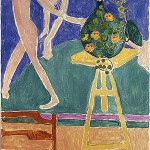
Matisse, Nasturtiums and the Dance, 1912, Metropolitan Museum of Art

THE DIAL was a literary magazine that published T.S. Eliot’s The Waste Land, Thomas Mann’s Death in Venice and Virginia Woolf’s Mrs. Dalloway, as well as repro­duc­tions of artworks collected by Schofield Thayer, a Henry Jamesian char­acter who went abroad in search of old knowledge and new art.

Read the full article »
Ingres 1780 – 1980

Monday, December 1st, 1980
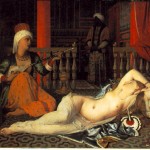
J.A.D. Ingres, "Odalisque avec Eslave," Fogg Art Museum

For a twentieth-century audience brought up on abstraction, INGRES’s greatness, his fasci­nation, lies in the abstract qual­ities of his line, its restless, obsessive movement across the page. Ingres’ line has power, grace, life; it’s bril­liant, dramatic, neurotic, even perverse. He told his students, “Drawing is every­thing; it is all of Art.”

Read the full article »
Gabriele Munter: From Munich to Murnau

Saturday, November 1st, 1980
Gabriele Munter, "Breakfast with Birds," 1934

A woman sits thinking, resting her head on her hand in a room filled with flowers and fruit. The room seems charged with meaning, filled with her extra­or­dinary presence. For GABRIELE MUNTER, art was not about appear­ances, but about real­ities lying behind appear­ances. Abstraction was a way of seeing into the heart of things.

Read the full article »
Claude Le Lorrain

Tuesday, April 1st, 1980
Claude Lorrain, Apollo And The Muses On Mt Helicon, 1628

CLAUDE LE LORRAIN depicts the moment just before trans­fig­u­ration — the moment just before women turn into goddesses, or girls turn into swans, or life turns into art. His light is dusk and twilight — the darkling light that washes the physical world in unearthly beauty and fills the heart with an intox­i­cating sense of possibility.

Read the full article »