Mark Morris/Orfeo
Orfeo ed Eurydice by Christoph Willibald Ritter von Gluck. Performed by the Handel & Haydn Society Orchestra, conducted by Christopher Hogwood. Choreography by Mark Morris. At the Wang Center, April 1996.
(Originally published in Boston Magazine April 1996)
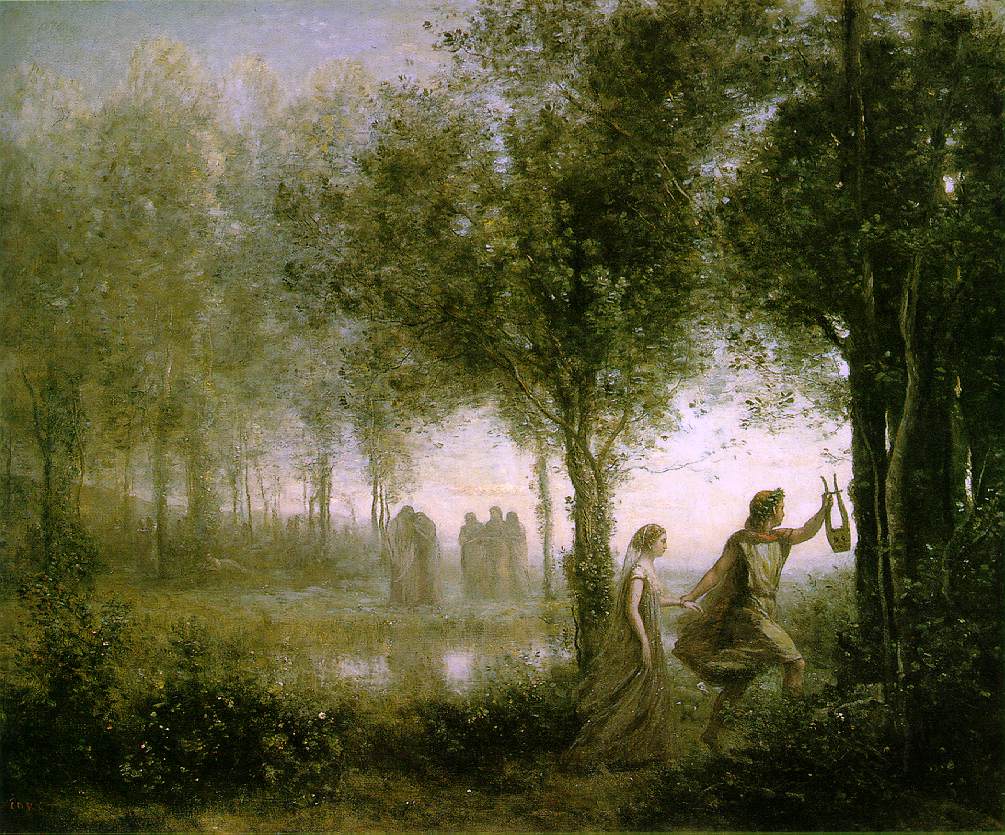
For many Bostonians, Mark Morris’s yearly appearances here have had the aura of the apparition of a god.
“I’m more recognized in Boston than anywhere in the world,” says dancer/choreographer Morris, when I meet him a few days before the first rehearsals of his new production of Gluck’s opera Orfeo ed Euridice.
He has spent the last few months listening to the opera, studying the score, looking at images of Orpheus from antiquity, and reading Ovid’s Metamorphosis. With his long, curly hair, he looks wonderfully like portraits of bewigged Baroque musicians. His eyes are light, luminous, sky-blue. Waving his beautiful hands in the air, he exclaims,
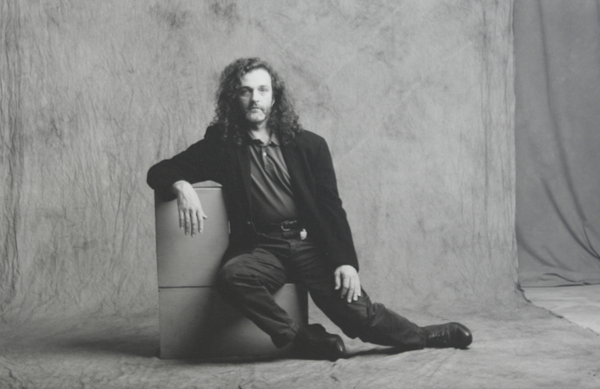 “If you’re expecting a scary horror-show display of the most vulgar post-modern theatricals, you’re going to be very disappointed.
All I can tell you is that it’s going to be fabulous.”
The opera is being produced in conjunction with the Handel & Hayden Society, and will travel to New York and then the Edinburgh Dance Festival after its Boston run. H&H conductor Christopher Hogwood says,
“It’s a meeting of two like minds. An ancient music person collaborating with a slightly scandalous modern choreographer. The danger in traditional productions is that the opera can be static — statuesque — classic in a frozen sense. But Mark sees it as fluid. He understands that opera is a process. Mark’s an individual. His body is not polished marble. He’s alive. And that’s what the classics are. They’re not still there because they’re dead. They’re there because they’re alive.”
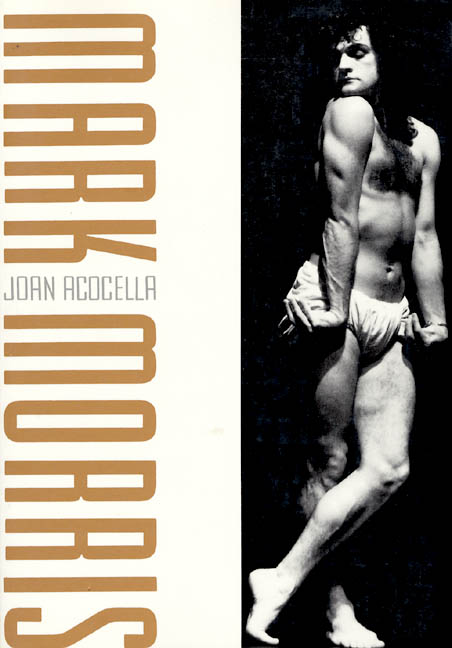 Mark Morris’s story is the stuff of myth. “The world’s greatest choreographer” — who has been featured in Vanity Fair, photographed by Annie Liebowitz, winner of a MacArthur Foundation five year “genius” grant, cameoed in Unzipped, on the cover of New York Magazine — was born in Seattle in 1956. His father was a high-school teacher; his mother a housewife whose own father had had a theatrical streak, which she recognized and encouraged in Mark.
“Maxine Morris, a woman of completely conventional appearance and manners, was absolutely unswerving in her support of this unconventional child,“Â writes Joan Acocella in her book Mark Morris. {“Such a good book,” sighs Morris. “Most dancer bios are just cocaine and sex with Baryshnikov.”) By the age of nine, he knew he wanted to be a dancer. His mother found the perfect teacher for him: Verla Flowers, who had studied ballet, jazz, ballroom, and flamenco; she taught him everything she knew. At thirteen, he joined the Koleda Dance Ensemble, a sixties communal dance group which studied and performed Balkan dances.
In 1976, Morris moved to New York, danced with several choreographers, and auditioned for Twyla Tharp and Paul Taylor, who turned him down. In 1980, with a group of friends, he formed the Mark Morris Dance Group. Acocella writes,
“Morris by this time was an extraordinary dancer. He was physically impressive — handsome and large (5′ 11”) — and possessed of a brilliant technique. He could balance, he could jump, he could turn forever and end in the position he wanted…You couldn’t take your eyes off him, whether you wanted to or not.”
Amazingly inventive, Morris choreographed dances to music by Vivaldi, Schoenberg, Yoko Ono, texts by Roland Barthes, as well as dance numbers for operas directeby Peter Sellars. In 1987, Sellars invited Gerard Mortier, then director of the Theatre Royale de la Monnaie, the national opera house of Belgium, to see Mark Morris dance. For Mortier, it was “un coup de foudre,” and he invited Morris to become dance director of La Monnaie. For the first time, Morris was able to work in a real theatre, with sets, costumes, a chorus of well-paid dancers, and most importantly, live music, which he adores. ”
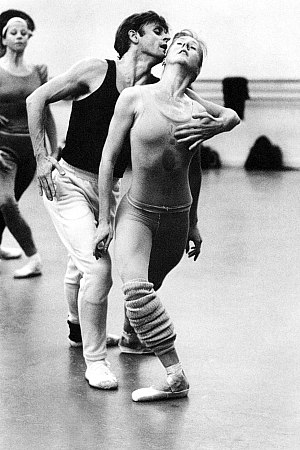 Mikhail Baryshnikov came to Brussels to dance with Morris, and they later toured together in the White Oaks Dance Project. “His dances are very soulful, extremely personal, and outrageously honest — very much like him,“ says Baryshnikov.
Morris’s choreography mixes moves from many different forms of dance: ballet, modern dance classics like Balanchine and Graham, folk dancing, ancient dances, and ordinary movement. “There’s a fine line between dancing and not dancing and I have no idea what that is,” Morris told the South Bank Show. Many of Morris’s original dancers are still with the group. More athletic than balletic, their movement is full of gravity as well as grace. They are often older, heavier — more real — than most dancers (the Belgian press complained that some of the women had cellulite). But they convey a sense of genuine physical and personal presence. “I want my dancers to look like people when they dance.” says Morris.
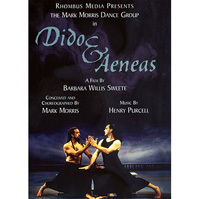 In Brussels, Morris matured as a choreographer; his work became more classical and more profound. In his 1988 L’Allegro, Il Penseroso ed Il Moderato, with music by Handel, he seemed to find the “hidden soul of harmony” — lines from the music’s text, a poem by John Milton, which became an emblem for his way of dance. The next year, in Purcell’s Dido and Aeneas, Mark danced two female roles — Dido, Queen of Carthage, and the evil Sorceress who plots her doom. Shocking to conservatives, thrilling to the gender theory crowd, it was for Morris a natural decision. “It was the best role,” he shrugs. As Dido, he entered the stage with a shudder of horror — a large man, with big hairy arms, in a sleeveless black dress — embodying all the pain of love, all the anguished, hopeless, unrequited longing, all the cruelty of loss and leaving. Morris’s Dido was a truly tragic vision — dark and wounded, full of passion and pain.
Orfeo is even darker and more tragic than Dido. It is a secular requiem — a tragedy of yearning — a cry of mourning for a lost love.
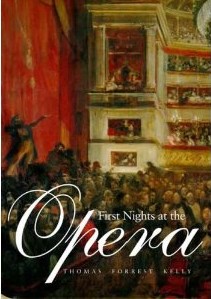 I talked about the opera with Thomas Forrest Kelly, professor of music at Harvard, who said, “It begins with a funereal chorus in the antique style, with cornetto and trombones. And then Orpheus comes in, lamenting his lost love, and sings one single word. Eurydice. He sings it three times. He doesn’t say much, but he says everything he needs to say, and the third time he sings it, it sends chills up your spine.””
“In his letters, Gluck warned against singing those lines too beautifully,” says Christopher Hogwood. “He said that the singer should scream it, not sing it, that it should sound like a cry of pain.”
The composer,  Christoph Willibald Ritter von Gluck (1714 – 1787) was born in 1714 in Bohemia; his father was a huntsman, who discouraged the boy’s love of music, so, as a teenager, he ran away from home, supporting himself by singing, all the way to Prague, where he studied music, played the organ in church, and listened to opera for the first time. Ten years in Italy refined his style. He wrote quite a few long-forgotten operas, married a wealthy and adoring wife, became a court composer in Vienna and a Chevalier. In 1762, when he was almost fifty years old, he wrote the opera that was to put him on the map: Orfeo.
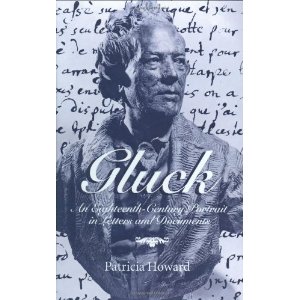 The libretto was by the poet Calzabigi, a friend of Casanova, whose austere neo-classical poetry was perfectly suited to Gluck’s music. The role of Orfeo was written for the famous castrato singer Gaetano Guadagni, for whom Handel wrote the “For he is like a refiner’s fire” aria in Messiah. Nowadays, Orfeo is usually taken by a woman — Shirley Verrett, Marilyn Horne, and Janet Baker have all sung the role — but here it will be sung by the countertenor Michael Chance. “He’s fabulous,” says Morris.
In Orfeo, Gluck refined away the frills and trills of conventional Italian opera, making the music pure poetry. “It’s a miracle of orchestration and balance and color,” says Morris. “It’s desparate and modern. Very, very modern. There’s not a wasted breath.”
In the myth, Orpheus finds his Eurydice, but just as they are on the threshold of return, he looks back, and she disappears forever. Orpheus comes back to earth alone and in despair. Wild women dancing in a forest tear him to pieces and throw his head into the river; it drifts out to sea, still singin, and the lovers are reunited only in death. But Gluck’s opera has a happy ending — the gods relent, Euryidice lives, and they all sing a hymn of praise. “That cheap ending!” exclaims Mark, waving his hands. “The king demanded a happy ending because it was his birthday. It’s the wrong ending, but ultimately it works, because it’s a celebration of Love. It’s fabulous.”
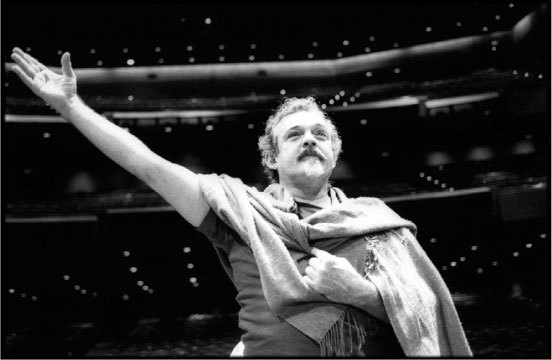
Gluck’s Orfeo was a huge success. In Paris, it was the favorite opera of Marie-Antoinette and Jean-Jacques Rousseau, who said that hearing Orfeo made him feel that life was worth living. The opera unlocked something in Gluck; it was the beginning of a late, great flowering of his style. Morris, too, comes to Orfeo in the middle of his life. As a dancer, he’s an older artist, who has lived and suffered, and polished the intensity of his youthful energy to a clear, gemlike flame.
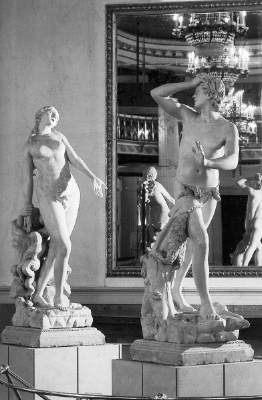
Orpheus is the perfect subject for Mark Morris — a mythical musician of extraordinary beauty and talent who came to embody the spirit of art. For the poet Rainer Maria Rilke, whose Sonnets to Orpheus, in a fabulous new, Zen-inspired translation by Stephen Mitchell is undergoing a major revival, Orpheus was the moment of inspiration — the divine spark:
“We do not need to look
for other names. It is Orpheus once for all
whenever there is song. He comes and goes.
Isn’t it enough if sometimes he can dwell
with us a few days longer than a rose?”by Rebecca Nemser for rebeccanemser.com
Tags: Calzabigi, Christopher Hogwood, Gerard Mortier, Gluck, Handel & Haydn Society, Jean-Jacques Rousseau, Marie-Antoinette, Mark Morris, Mikhail Baryshnikov, Peter Sellars, Rainer Maria Rilke, Stephen Mitchell, Thomas Forrest Kelly, Yoko Ono